What is Python?
Python is a programming/scripting language that can be used on many different computers and operating systems, including Windows, Unix, Macintosh, etc.

Python is a programming/scripting language that can be used on many different computers and operating systems, including Windows, Unix, Macintosh, etc.
It’s very straightforward and easy to read and write. It’s now one of the most popular programming languages.
The first and most obvious thing to do is download Python and start playing!
Welcome everyone to the part 7 of the Django blog tutorial series. It’s been a long time since the last part in this series, so I am going to explain a bit what we did in this tutorial series and what we are going to do today. In this tutorial series we have built a

In the last part, we deployed our application to the Heroku platform but we need to send emails so that our users can request a reset password. In this part, we are going to set up an email service provider in our Django application to send emails. We are going to use SendGrid, which offers a free
OpenCV is a library written in C++ aimed to provide an infrastructure for computer vision and machine learning. The library contains more than 2500 algorithms that are used for facial detection, gesture recognition, augmented reality, tracking moving objects, identifying objects, etc. In this tutorial, we will create a simple document scanner using the OpenCV library.
In the previous tutorial, we saw how to use a pre-trained YOLO model to detect objects in images and videos. We learned how to load the weights and configuration files, and how to perform object detection using YOLOv3 and OpenCV. However, we were limited to detect the classes the pre-trained model was trained on. In some
This is the fifth part of our tutorial series! We are going to deploy our Django application to the Heroku cloud platform. Heroku is a platform as a service that is very easy to set up and has a free service level for small projects, which is quite limited though. We will continue where we
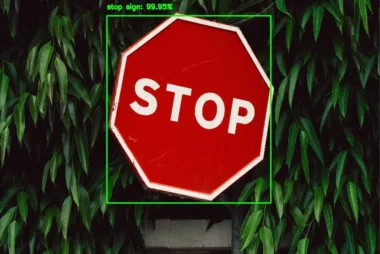
In this tutorial, I’ll show you how to use the YOLO model, and specifically YOLOv3, to detect objects in images and real-time videos using Python and OpenCV. YOLO (You Only Look Once) is a single stage object detector, meaning it makes predictions for the bounding boxes and class labels of objects in an image in
I mentioned in the previous tutorial that there are two ways to do transfer learning via feature extraction: Or we can use feature extraction like this: We already saw in the previous tutorial how to do transfer learning with the second option. So in today’s blog post, I will show you how to do transfer learning via feature extraction with
Welcome to the fourth part of the Django blog tutorial series. In this part, we are going to allow users to create blog posts. We are also going to implement a comment system. We will continue where we left off in the third part. Users’ Posts Now that we have users in the system, we
In this tutorial, we will use transfer learning and fine-tuning with Python, Keras, and deep learning to classify images from the dogs vs cats dataset. We will use the VGG19 model pre-trained on ImageNet as our base model. What is Transfer Learning Transfer learning consists of using a model that has been trained on a large dataset such

In this tutorial, we will see how to use OpenCV Haar Cascades to detect license/number plates. Haar cascade is a type of machine learning algorithm that is used for object detection. It was first introduced in 2001 by Paul Viola and Michael Jones in the paper Rapid Object Detection using a Boosted Cascade of Simple Features. Now to